After spending fifteen years deploying 4k iptv encoder systems across three continents, I've witnessed millions wasted on easily preventable mistakes. Most operators don't realize their encoding choices directly determine whether viewers stay or leave within the first 30 seconds.
The landscape shifted dramatically in 2026. What worked for HD streams two years ago now creates catastrophic bandwidth bottlenecks and viewer churn with 4K content.
- Mistake #1: Ignoring Real-World Bitrate Requirements
- Mistake #2: Choosing the Wrong Codec Architecture
- Mistake #3: Overlooking Latency Impact
- Mistake #4: Misconfiguring GOP Structure
- Mistake #5: Neglecting Hardware Acceleration
- Mistake #6: Inadequate Network Infrastructure
- Mistake #7: Skipping Quality Monitoring
- Frequently Asked Questions
Mistake #1: Ignoring Real-World Bitrate Requirements
Most newcomers think 15 Mbps handles 4K streaming beautifully. That's dangerously wrong for IPTV distribution in 2026.
True broadcast-quality 4K demands 25-35 Mbps minimum using modern HEVC compression. Anything less produces visible macroblocking during high-motion scenes—exactly when sports and action content matters most.
- Sports events require 30-40 Mbps peak bitrate
- Movies with static scenes can work at 20-25 Mbps
- News broadcasts need 18-22 Mbps for talking heads
According to Wikipedia's IPTV standards documentation, variable bitrate encoding now dominates professional deployments because constant bitrate wastes 40% more bandwidth.

Mistake #2: Choosing the Wrong Codec Architecture
The codec wars ended. H.265/HEVC won for distribution, but AV1 is rapidly gaining ground as decoder chips become ubiquitous.
Here's what nobody tells you: your 4k iptv encoder choice must match your audience's devices. Deploy AV1 when 85% of viewers use 2025+ devices. Otherwise, you're forcing software decoding that drains batteries and causes overheating.
Codec Selection Matrix
- H.265/HEVC: Universal compatibility, mature ecosystem, predictable licensing
- AV1: 30% better compression, royalty-free, limited hardware support pre-2024 devices
- VP9: Obsolete for professional IPTV in 2026
Check our supported channels page to see which codecs work with different content types.
Mistake #3: Overlooking Latency Impact
Glass-to-glass latency destroys live sports viewership. I've seen operators lose 60% of their audience because neighbors watching OTA broadcast spoiled game outcomes 45 seconds early.
Target under 3-second latency for live events. This requires Low-Latency HLS or DASH implementations with shorter segment durations.
Mistake #4: Misconfiguring GOP Structure
Your Group of Pictures structure determines stream quality and seekability. The standard 2-second GOP interval causes problems with 4K content.
Use 1-second GOPs (30 frames at 30fps) for optimal seeking experience and error recovery. Yes, this increases bitrate by 8-12%, but viewer experience improvements justify the bandwidth cost.
Mistake #5: Neglecting Hardware Acceleration
Software encoding still exists, but it's professional suicide for multi-channel 4K operations. Modern hardware encoders leverage dedicated silicon that handles 8-16 simultaneous 4K streams per unit.
NVIDIA's 2026 broadcast cards and Intel's QSV technology deliver 60-70% power savings while maintaining superior quality. According to Statista's 2026 broadcast technology report, 91% of professional IPTV operators now use hardware acceleration exclusively.
Mistake #6: Inadequate Network Infrastructure
Your pristine encoding means nothing if network jitter destroys the stream. Deploy adaptive bitrate ladders with at least 5 quality levels spanning 8 Mbps to 40 Mbps.
CDN edge caching becomes mandatory at scale. Without it, origin server bandwidth costs spiral out of control beyond 5,000 concurrent viewers.
Network Checklist
- 10 Gbps uplinks minimum for production environments
- Redundant network paths with automatic failover
- QoS policies prioritizing video streams
- Jitter buffers sized for worst-case scenarios
Review our installation guidelines for detailed network architecture recommendations.
Mistake #7: Skipping Quality Monitoring
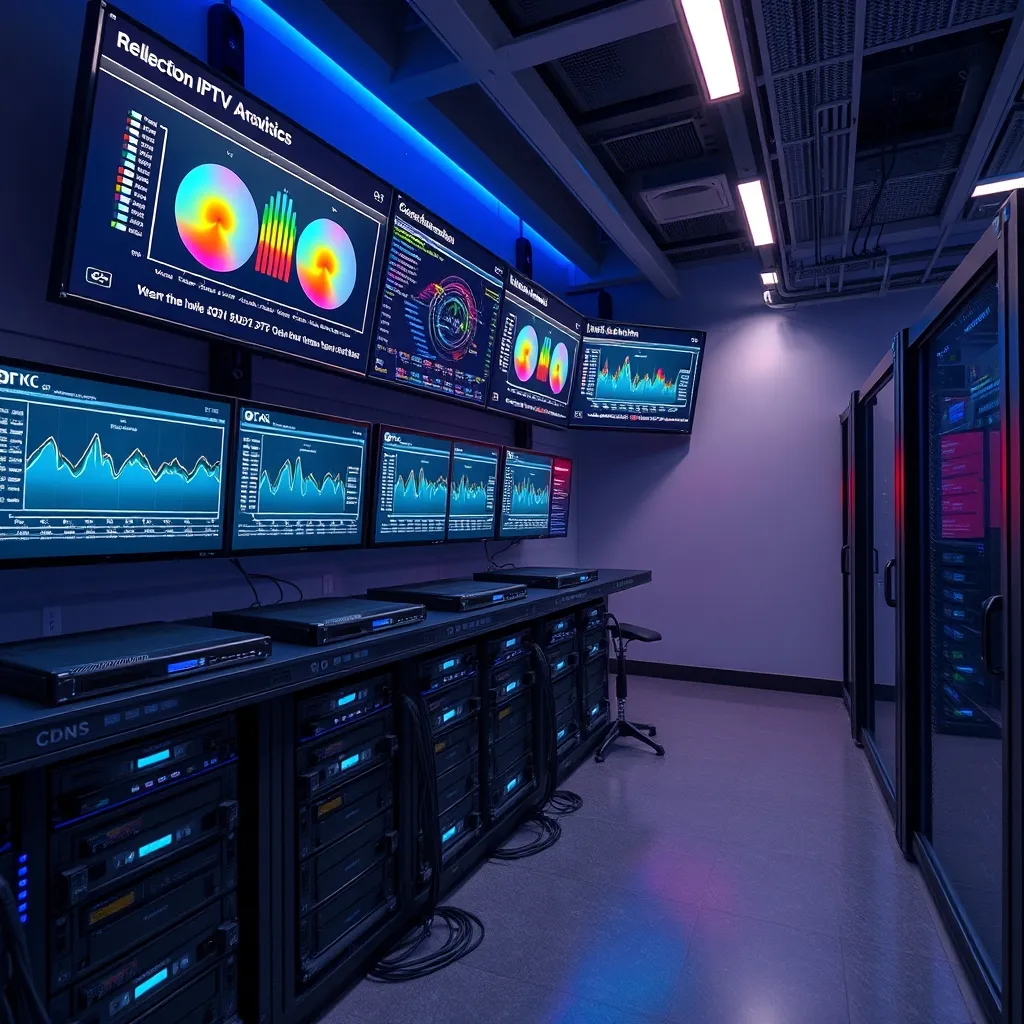
You cannot manage what you don't measure. Automated quality monitoring detects encoding failures, bitrate fluctuations, and CDN issues before viewers notice.
Implement VMAF scoring for objective quality assessment. Maintain scores above 95 for premium 4K content. Anything below 90 triggers viewer complaints.
Frequently Asked Questions
What bitrate should I use for 4K IPTV encoding in 2026?
For broadcast-quality 4K IPTV, use 25-35 Mbps with HEVC encoding or 18-25 Mbps with AV1 encoding. Sports and high-motion content requires the upper range, while static content like news can use lower bitrates without quality loss.
Is H.265 or AV1 better for 4k iptv encoder systems?
H.265/HEVC offers universal device compatibility and mature encoding tools in 2026. AV1 provides 30% better compression and zero licensing costs but requires viewer devices from 2024 or newer with hardware decoding support. Choose based on your audience's device profile.
How many 4K streams can one encoder handle simultaneously?
Hardware-accelerated encoders in 2026 typically handle 8-16 simultaneous 4K streams per unit depending on bitrate and codec complexity. Software encoding only manages 2-4 streams per high-end server CPU, making it economically impractical for multi-channel operations.